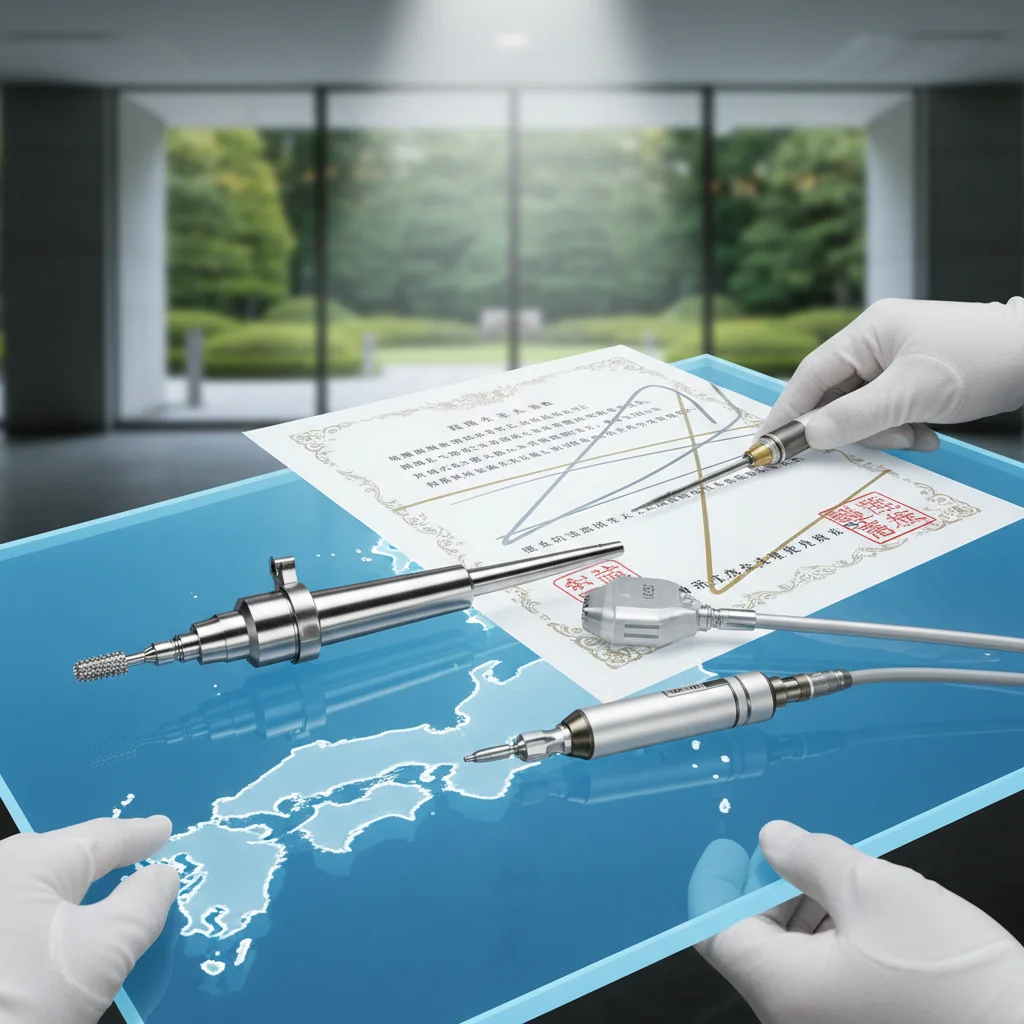
PMDA Approves Peripheral Rotablator PRO and Visual-ICE Cryoablation System Modifications in Japan
Japan's PMDA grants partial change approval for Peripheral Rotablator PRO and Visual-ICE Cryoablation System, expanding cardiovascular treatment options.
Intelligence Snapshot
Executive Summary
PMDA approved partial changes to Peripheral Rotablator PRO and Visual-ICE Cryoablation System for enhanced cardiovascular procedures
Key Insights
-
The approval expands treatment options for patients with peripheral artery disease and…
The approval expands treatment options for patients with peripheral artery disease and cardiac arrhythmias in Japan
-
Updated review reports are now available in English, improving regulatory transparency…
Updated review reports are now available in English, improving regulatory transparency for international stakeholders
Market Impact
| Regulatory | medium |
|---|---|
| Commercial | medium |
| Competitive | low |
| Investment | low |
Executive Scorecard
Heuristic scores · directional, not investment adviceContents6 sections
Key Takeaways
- PMDA approved partial changes to Peripheral Rotablator PRO and Visual-ICE Cryoablation System for enhanced cardiovascular procedures
- The approval expands treatment options for patients with peripheral artery disease and cardiac arrhythmias in Japan
- Updated review reports are now available in English, improving regulatory transparency for international stakeholders
The Pharmaceuticals and Medical Devices Agency (PMDA) has granted partial change approval for two critical cardiovascular medical devices: the Peripheral Rotablator PRO and Visual-ICE Cryoablation System. This regulatory milestone enhances Japan’s arsenal of advanced cardiovascular treatment technologies.
Enhanced Cardiovascular Treatment Capabilities
The Peripheral Rotablator PRO represents a significant advancement in treating peripheral artery disease (PAD), a condition affecting millions of patients worldwide. This rotational atherectomy device helps remove calcified plaque from arteries, improving blood flow to extremities. The partial change approval likely includes modifications that enhance the device’s safety profile or expand its clinical applications.
Simultaneously, the Visual-ICE Cryoablation System approval addresses the growing need for effective cardiac arrhythmia treatments. Cryoablation technology uses controlled freezing to eliminate abnormal heart tissue that causes irregular heartbeats, offering patients an alternative to traditional radiofrequency ablation.
IntelligenceRegulatory Impact
PMDA are the agencies to watch. Regulatory relevance reads medium for pharmaceutical intelligence. Teams should track submission types, designations, and guidance shifts that could move approval timelines.
Regulatory Transparency and Market Impact
PMDA’s publication of English-language review reports demonstrates Japan’s commitment to regulatory transparency and international collaboration. This accessibility enables global pharmaceutical companies and medical device manufacturers to better understand Japan’s approval processes and requirements.
The approval timing aligns with Japan’s aging population demographics, where cardiovascular diseases represent a significant healthcare burden. These advanced treatment options provide physicians with more precise tools for managing complex cardiovascular conditions.
IntelligenceCompetitive Intelligence
Competitive pressure is low. Watch which sponsors move first. Benchmark pipeline positioning, differentiation, and partnership scouting against the signals in this story.
Industry Implications
This approval reflects PMDA’s continued modernization of medical device regulations, potentially accelerating future approvals for innovative cardiovascular technologies. The partial change approval pathway allows manufacturers to introduce improvements without undergoing complete reapproval processes, encouraging continuous innovation.
For healthcare providers, these approvals mean access to refined treatment technologies that may offer improved patient outcomes and procedural efficiency. The devices’ enhanced capabilities could reduce procedure times and improve success rates for challenging cardiovascular interventions.
Frequently Asked Questions
What conditions do these approved devices treat?
The Peripheral Rotablator PRO treats peripheral artery disease by removing calcified plaque, while the Visual-ICE Cryoablation System treats cardiac arrhythmias through controlled freezing of abnormal heart tissue.
When will these devices be available to Japanese patients?
Following PMDA approval, the devices are typically available within months, pending final commercial preparations by the manufacturers and healthcare facility procurement processes.
How do these devices compare to existing cardiovascular treatments?
Both devices offer advanced, minimally invasive alternatives to traditional surgical approaches, potentially providing better precision, reduced recovery times, and improved patient outcomes compared to conventional treatments.
Related coverage
Ask AI About This Topic
Grounded in NovaPharmaNews intelligence. Pick a prompt to start.
Stay Updated on Pharma News
Get the latest drug approvals, clinical trials, and regulatory updates delivered to your inbox.
- Evidence strength
- 71/100
- Last verified
- Jun 18, 2026
- AI-assisted review
- Yes
- Editorial review
- Dr. Sarah Chen
Moderate source quality · grounded in cited primary and secondary sources.
This article follows our editorial standards. Report a correction via editorial contact.