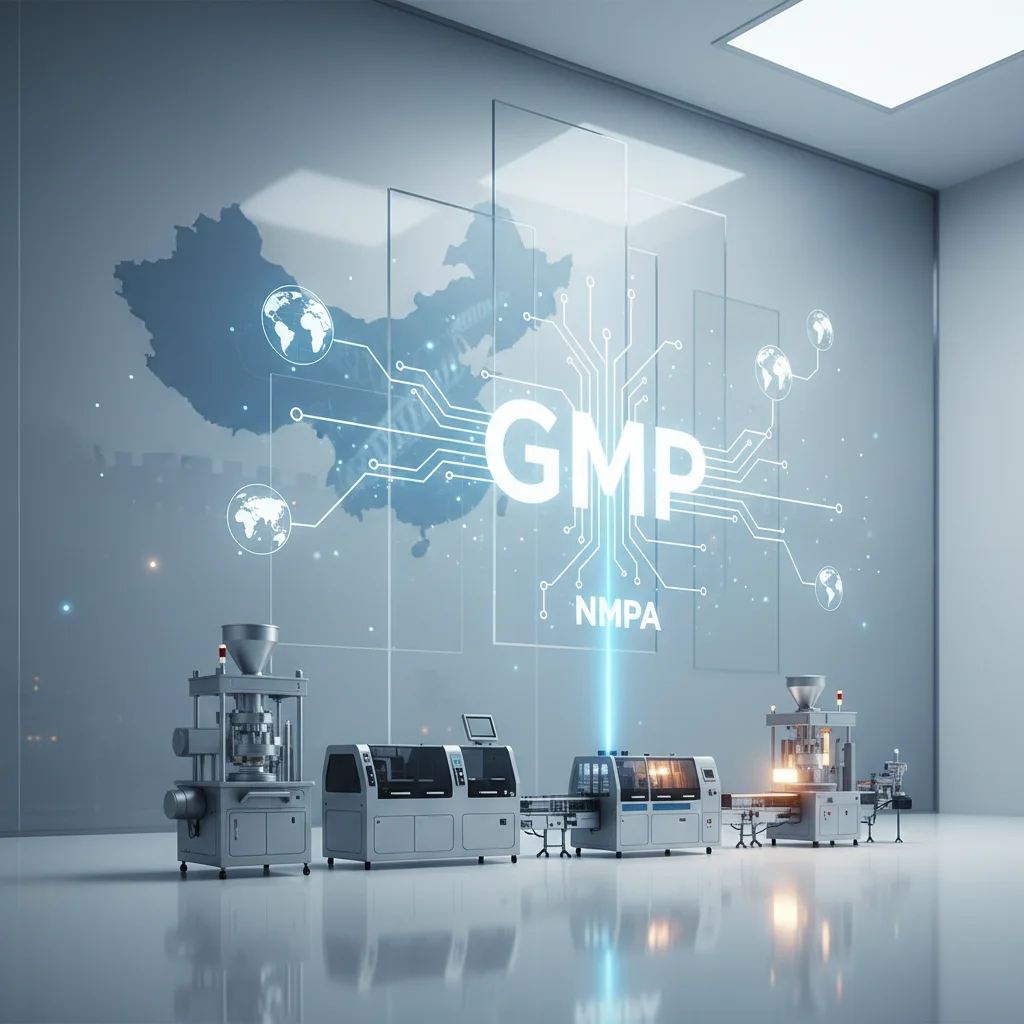
NMPA GMP Standards: Key Updates and Impact on Foreign Pharma Manufacturers
This article explores key updates to NMPA GMP standards and their significant implications for foreign pharmaceutical manufacturers in the Chinese market.
Intelligence Snapshot
Executive Summary
This article explores key updates to NMPA GMP standards and their significant implications for foreign pharmaceutical manufacturers in the Chinese market.
Market Impact
| Regulatory | medium |
|---|---|
| Commercial | medium |
| Competitive | low |
| Investment | low |
Quick Answer
Key Questions
- What are the primary differences between NMPA GMP standards and FDA or EMA GMP requirements?
- How long does it typically take for a foreign manufacturer to achieve NMPA GMP compliance?
- What role do contract manufacturing organizations (CMOs) play in NMPA GMP compliance?
- How frequently does NMPA conduct facility inspections, and what triggers regulatory action?
- What are the specific data integrity requirements under updated NMPA GMP standards?
Executive Scorecard
Heuristic scores · directional, not investment adviceContents8 sections
China's National Medical Products Administration (NMPA) has substantially revised its Good Manufacturing Practice (GMP) standards in recent years, fundamentally reshaping compliance requirements for foreign pharmaceutical manufacturers seeking market access or maintaining operations in the world's second-largest pharmaceutical market. The latest updates, building on the 2021 revisions and subsequent enforcement guidance, introduce stricter environmental controls, enhanced data integrity requirements, and closer alignment with International Council for Harmonisation (ICH) and World Health Organization (WHO) standards—creating both compliance challenges and opportunities for international manufacturers to demonstrate quality leadership in the Chinese market.
NMPA GMP Standards: Regulatory Framework and Historical Evolution
The National Medical Products Administration (NMPA), China's primary regulatory authority for pharmaceutical products, has progressively strengthened its GMP standards over the past two decades as part of broader pharmaceutical quality assurance modernization. The NMPA GMP standards serve as the foundational regulatory requirement for all pharmaceutical manufacturing operations in mainland China, whether conducted by domestic or foreign manufacturers. These standards establish mandatory requirements for facility design, equipment qualification, personnel training, production processes, quality control testing, and documentation systems.
Historically, NMPA GMP standards evolved through several major iterations: the 1992 initial GMP rules, the 1998 revisions, and the 2010 comprehensive update that introduced more rigorous environmental monitoring and data integrity expectations. The 2021 NMPA GMP Standards update represented a watershed moment, introducing requirements substantially aligned with ICH Q10 pharmaceutical quality systems and WHO GMP guidelines. This convergence reflects China's strategic commitment to harmonizing domestic regulations with international best practices and facilitating mutual recognition agreements with major regulatory bodies.
The rationale behind these successive revisions centers on three core objectives: enhancing pharmaceutical product safety and efficacy through stricter manufacturing controls, reducing counterfeit and substandard drug infiltration into the supply chain, and positioning Chinese pharmaceutical manufacturers for international competitiveness and regulatory acceptance. For foreign manufacturers, these updates have become non-negotiable compliance requirements affecting market entry timelines, capital investment in facility upgrades, and ongoing operational costs.
IntelligenceRegulatory Impact
NMPA set GMP, data-integrity, and post-approval change expectations for sterile and biologics manufacturing in Asia-Pacific. Regulatory relevance reads medium for pharmaceutical intelligence. Track inspection trends, Annex 1 alignment, and submission pathways for continuous manufacturing.
Key Changes in the Latest NMPA GMP Standards
The 2021 and subsequent NMPA GMP standards updates introduced several material changes that directly impact manufacturing operations and quality assurance functions:
IntelligenceCompetitive Intelligence
Competitive pressure is low on capacity and tech-transfer positioning. Benchmark which CDMOs, equipment vendors, and sponsors adopt continuous and isolator platforms first. Supplier hub and pipeline links below connect to named partners.
Implications for Foreign Pharmaceutical Manufacturers Operating in China
Foreign manufacturers face multifaceted compliance challenges when adapting operations to updated NMPA GMP standards. The transition typically requires significant capital investment in facility upgrades, including HVAC system modifications, cleanroom reclassification, and installation of automated environmental monitoring systems. For a mid-sized sterile manufacturing facility, compliance-driven capital expenditure commonly ranges from $5 million to $25 million depending on baseline facility conditions and therapeutic area.
Regulatory compliance hurdles include comprehensive facility inspections conducted by NMPA inspectors who evaluate adherence to specific technical requirements outlined in the standards. These inspections assess documentation systems, batch records, deviation investigations, and employee training records. Foreign manufacturers commonly report inspection timelines of 3–6 months from initial submission to regulatory clearance, with potential for extended timelines if significant deviations are identified.
Manufacturing timeline impacts are substantial. Facility upgrades typically require 12–24 months to complete, followed by validation studies, process qualification batches, and regulatory submission review. Foreign manufacturers often employ a phased compliance approach: prioritizing critical quality parameters first, then progressively implementing secondary requirements to minimize production disruptions.
Successful strategies for GMP certification include early engagement with NMPA through pre-submission meetings to clarify expectations, retention of local regulatory consulting firms with established NMPA relationships, comprehensive gap assessments comparing current operations against updated standards, and investment in employee training programs tailored to NMPA-specific requirements. Foreign manufacturers increasingly establish joint ventures or partnership arrangements with established Chinese pharmaceutical companies that provide regulatory guidance, facility access, and local compliance expertise.
The role of local partnerships has become increasingly critical. Foreign manufacturers without established Chinese operations typically engage contract manufacturing organizations (CMOs) or joint venture partners that maintain NMPA-compliant facilities and possess institutional knowledge of regulatory expectations. These partnerships accelerate market entry but require careful management of intellectual property, technology transfer, and quality oversight responsibilities.
IntelligenceMarket Signals
Commercial pull is medium for manufacturing capacity, outsourcing, and supply resilience. Investment relevance is low — watch capex, licensing, and regional hub expansion.
Market Impact and Competitive Landscape
The strengthened NMPA GMP standards create a bifurcated competitive landscape. Larger multinational pharmaceutical manufacturers with established global quality systems and compliance infrastructure adapt more readily to updated requirements, leveraging existing ICH-aligned systems and experienced regulatory personnel. Smaller foreign manufacturers and emerging market players face proportionally higher compliance costs relative to revenue, potentially creating market consolidation pressures.
For foreign manufacturers, the updated standards create barriers to entry that protect established market participants while raising overall pharmaceutical manufacturing quality across the Chinese market. This regulatory intensification has driven increased outsourcing to established CMOs and contract development and manufacturing organizations (CDMOs) that have already achieved NMPA compliance, particularly for smaller companies and those entering the Chinese market for the first time.
The Chinese pharmaceutical market, valued at approximately $145 billion USD annually, remains a critical growth market for foreign manufacturers. However, market access increasingly requires demonstrated GMP compliance capabilities. Foreign manufacturers in therapeutic areas including oncology, biologics, and specialty pharmaceuticals face the most rigorous scrutiny, as these sectors represent higher-value market opportunities and carry elevated safety and efficacy expectations.
IntelligenceStrategic Takeaways
This article explores key updates to NMPA GMP standards and their significant implications for foreign pharmaceutical manufacturers in the Chinese market.
Future Outlook and Regulatory Trends
The trajectory of NMPA GMP standards indicates continued convergence with global regulatory expectations. Expected future developments include enhanced requirements for continuous process verification, expanded data integrity audit protocols, and potential harmonization with European Medicines Agency (EMA) GMP guidelines through mutual recognition agreements currently under negotiation.
NMPA enforcement patterns suggest increasing emphasis on digital transformation and automated compliance monitoring. Foreign manufacturers should anticipate future requirements for real-time batch record systems, cloud-based environmental monitoring, and predictive quality analytics that leverage manufacturing data to identify potential deviations before they impact product quality.
The regulatory environment also reflects China's strategic priority to develop advanced pharmaceutical manufacturing capabilities domestically. Foreign manufacturers should expect continued NMPA engagement through industry forums, pre-submission guidance meetings, and collaborative standard-development initiatives. Proactive engagement with NMPA through industry associations and regulatory intelligence networks provides competitive advantages in understanding evolving expectations.
Foreign manufacturers should prioritize continuous training programs for quality and manufacturing personnel, establish regular internal audit schedules that exceed minimum requirements, and invest in technology platforms that support ALCOA+ data integrity compliance. Organizations that position themselves as leaders in pharmaceutical quality and regulatory compliance strengthen their competitive positioning in the Chinese market while reducing regulatory risk.
Frequently Asked Questions
What are the primary differences between NMPA GMP standards and FDA or EMA GMP requirements?
While NMPA GMP standards now align substantially with ICH Q10 and WHO guidelines, key differences persist in specific technical requirements and enforcement approaches. NMPA standards place particular emphasis on environmental monitoring automation, data integrity audit procedures, and risk-based change management documentation. Foreign manufacturers should not assume that FDA or EMA compliance automatically satisfies NMPA requirements; facility-specific gap assessments are essential. NMPA inspectors typically conduct more detailed facility walkthroughs and batch record reviews than counterparts at other regulatory agencies, requiring meticulous documentation practices.
How long does it typically take for a foreign manufacturer to achieve NMPA GMP compliance?
Timeline varies significantly based on baseline facility conditions and therapeutic area. For a facility with existing GMP infrastructure, compliance achievement typically requires 12–24 months including gap assessment, facility modifications, validation studies, and regulatory submission review. Facilities beginning from minimal compliance baseline may require 24–36 months. Sterile and biologics manufacturing facilities face longer timelines due to enhanced validation requirements. Early engagement with NMPA through pre-submission meetings can accelerate timelines by clarifying expectations and prioritizing critical requirements.
What role do contract manufacturing organizations (CMOs) play in NMPA GMP compliance?
CMOs and CDMOs that have achieved NMPA compliance provide critical pathways for foreign manufacturers seeking rapid market access without establishing independent manufacturing operations. These organizations maintain NMPA-compliant facilities, employ regulatory expertise, and possess institutional knowledge of inspection expectations. Foreign manufacturers utilizing CMOs should maintain oversight of manufacturing operations through quality agreements, regular audits, and participation in deviation investigations. CMO partnerships do not eliminate foreign manufacturer responsibility for product quality; regulatory accountability remains with the marketing authorization holder.
How frequently does NMPA conduct facility inspections, and what triggers regulatory action?
NMPA conducts routine compliance inspections typically every 2–3 years for established facilities, with additional inspections triggered by product complaints, adverse event reports, or deviation notifications. Inspection frequency may increase for new facilities or those with previous regulatory findings. NMPA enforcement actions range from warning letters for minor deviations to facility closure recommendations for serious quality system failures. Foreign manufacturers should maintain audit-ready status through continuous internal audits, documented corrective actions, and proactive communication with NMPA regarding any identified deviations.
What are the specific data integrity requirements under updated NMPA GMP standards?
NMPA standards now mandate ALCOA+ compliance for all manufacturing and quality data, requiring electronic systems with comprehensive audit trails, electronic signatures, and cybersecurity protections. Batch records must include contemporaneous documentation of all critical process parameters, environmental conditions, and quality control results with automated data capture where feasible. Manual data entry is permitted only where automated systems are not technically feasible, with documented justification. Foreign manufacturers must conduct data integrity assessments of existing systems and implement remediation where gaps exist. Third-party validation of electronic systems is increasingly required during regulatory inspections.
References
- National Medical Products Administration (NMPA). "Pharmaceutical Good Manufacturing Practice Standards (2021 Revision)." Chinese pharmaceutical regulatory guidance document, 2021.
- International Council for Harmonisation (ICH). "ICH Q10: Pharmaceutical Quality System." ICH guideline, 2008 (revised 2015).
- World Health Organization (WHO). "WHO Technical Report Series No. 961: Good Manufacturing Practices for Pharmaceutical Products." WHO guidelines, 2011.
- China National Pharmaceutical Industry Association. "Foreign Manufacturer Compliance with NMPA GMP Standards: Industry Analysis and Case Studies." Industry report, 2023.
- NMPA Inspection Center. "NMPA GMP Inspection Findings and Regulatory Enforcement Trends (2021–2024)." Regulatory enforcement data, 2024.
- International Pharmaceutical Federation (FIP). "Regulatory Convergence in Asia-Pacific: NMPA Standards Alignment with ICH Guidelines." FIP policy analysis, 2023.
Related coverage
Ask AI About This Topic
Grounded in NovaPharmaNews intelligence. Pick a prompt to start.
Stay Updated on Pharma News
Get the latest drug approvals, clinical trials, and regulatory updates delivered to your inbox.
- Evidence strength
- 44/100
- Last verified
- Jun 18, 2026
- AI-assisted review
- Yes
- Editorial review
- Dr. Sarah Chen
Limited source quality · grounded in cited primary and secondary sources.
This article follows our editorial standards. Report a correction via editorial contact.