PMDA SAKIGAKE Designation: Expediting Innovative Drug Approvals in Japan
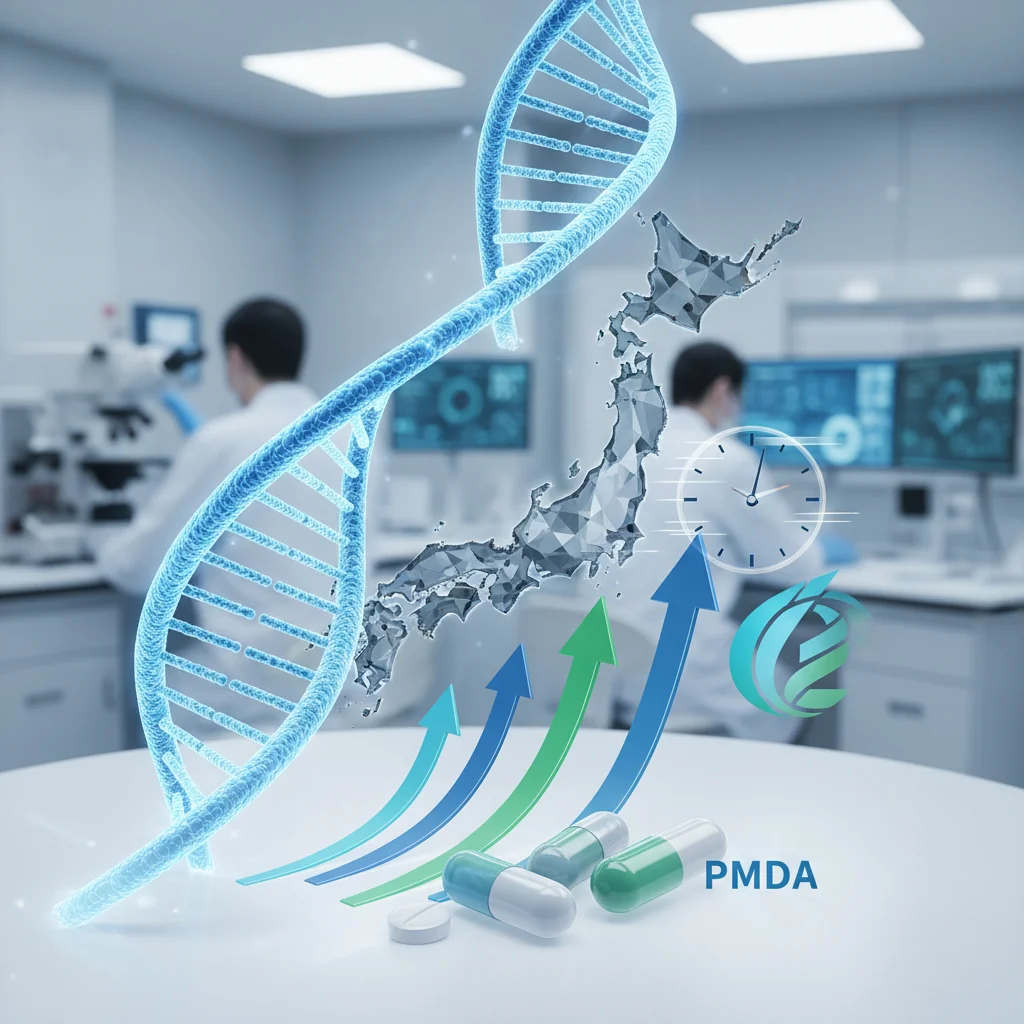
The PMDA SAKIGAKE Designation streamlines the approval process for innovative drugs, enhancing patient access to groundbreaking treatments in Japan.


Medically Reviewed
by Dr. James Morrison, Chief Medical Officer (MD, FACP, FACC)
Reviewed on: April 21, 2026
Key Takeaways
- Regulatory accelerator: Japan's Pharmaceuticals and Medical Devices Agency (PMDA) SAKIGAKE Designation, established in 2014, expedites approval for innovative drugs addressing serious unmet medical needs with a priority review target of six months and dedicated regulatory support.
- Expanded scope in 2026: The program's eligibility criteria broadened to include more gene therapies, regenerative medicines, and orphan drugs, lowering entry barriers for global developers.
- Market positioning: SAKIGAKE differentiates itself through early PMDA engagement, concierge support, and pre-application consultations, making Japan a more competitive hub for cutting-edge pharmaceutical innovation.
- Strategic value: The designation's expansion enhances Japan's attractiveness for oncology and rare disease developers seeking expedited pathways in the APAC region.
Japan's Ministry of Health, Labour and Welfare (MHLW) has strengthened its commitment to accelerating patient access to innovative therapies through the PMDA SAKIGAKE Designation approval pathway. Originally launched in 2014 to address a critical gap in drug development timelines for serious unmet medical needs, the SAKIGAKE program has evolved into a cornerstone of Japan's regulatory strategy for attracting global pharmaceutical innovation. The 2026 expansion of SAKIGAKE eligibility criteria marks a significant shift in Japan's competitive positioning within the APAC pharmaceutical landscape, particularly for developers of advanced modalities and rare disease treatments.
Understanding the PMDA SAKIGAKE Designation
The SAKIGAKE Designation represents Japan's answer to expedited drug approval frameworks used globally. Established by the MHLW in 2014, the program specifically targets innovative drugs that address serious unmet medical needs. Unlike standard regulatory pathways that may extend over several years, SAKIGAKE-designated drugs benefit from a priority review process with a target completion time of six months—a substantial acceleration compared to conventional timelines.
The designation operates through three core mechanisms. First, applicants receive priority review status, ensuring PMDA resources are allocated to expedite evaluation. Second, dedicated PMDA concierge support provides continuous guidance throughout the development and submission process, reducing regulatory uncertainty and enabling developers to address concerns proactively. Third, pre-application consultations allow sponsors to align development strategies with PMDA expectations before formal submission, streamlining the review process and minimizing the risk of major deficiencies that could delay approval.
Why it matters: The PMDA's SAKIGAKE Designation expedites approval for innovative drugs addressing serious unmet medical needs in Japan by providing priority reviews with a six-month target, dedicated regulatory support, and early consultation, thereby facilitating faster patient access to novel therapies.
Regulatory Context: Japan's Expedited Approval Landscape
Japan's standard drug approval process, overseen by the PMDA under MHLW authority, typically requires comprehensive review of manufacturing, preclinical, and clinical data across multiple stages. While thorough, this pathway can extend timelines for breakthrough therapies. The SAKIGAKE Designation modifies this framework by introducing priority review mechanisms and enhanced sponsor-regulator interaction.
Compared with other global expedited pathways such as the U.S. Food and Drug Administration (FDA) Breakthrough Therapy Designation or the European Medicines Agency (EMA) PRIority MEdicines (PRIME) scheme, SAKIGAKE offers a unique combination of early engagement and six-month review targeting. The FDA Breakthrough pathway emphasizes expedited review and potential for conditional approval; the EMA PRIME program focuses on early dialogue and rolling review. SAKIGAKE distinguishes itself by embedding concierge-level PMDA support and pre-application consultations as foundational elements, rather than optional enhancements.
The 2026 expansion of SAKIGAKE eligibility criteria represents a deliberate policy decision to broaden the program's reach. Previously, designations were granted selectively to drugs meeting highly specific criteria. The expanded framework now encompasses a wider range of gene therapies, regenerative medicines, and orphan drugs, reflecting MHLW recognition that innovation in these modalities requires accelerated pathways to ensure timely patient access.
Pre-application consultations under SAKIGAKE serve as a critical differentiator. Sponsors can present development plans, proposed clinical trial designs, and manufacturing strategies to PMDA experts before formal submission. This early feedback reduces the likelihood of substantial deficiencies and allows developers to align their programs with regulatory expectations from the outset, thereby shortening overall development timelines.
Therapeutic Areas and Program Scope
The SAKIGAKE program spans multiple therapeutic domains where unmet medical needs remain acute. Oncology represents a traditional focus area, with SAKIGAKE designations supporting development of novel targeted therapies, immunotherapies, and combination approaches for serious cancers. Rare diseases and orphan drug development have emerged as a major category under SAKIGAKE, recognizing the particular challenges faced by developers serving small patient populations.
The 2026 expansion significantly elevated the program's relevance to cutting-edge modalities. Gene therapies—including in vivo and ex vivo approaches targeting monogenic and complex genetic disorders—now qualify for SAKIGAKE consideration more readily. Regenerative medicine products, encompassing cell therapies, tissue-engineered constructs, and stem cell-derived treatments, have also moved into the expanded eligibility scope. This broadening reflects Japan's strategic positioning as a leader in advanced therapeutics development and manufacturing.
The inclusion of orphan drugs within the expanded SAKIGAKE framework is particularly significant for global developers. Rare disease sponsors often face resource constraints and lengthy development timelines due to small patient populations. By offering priority review and dedicated PMDA support, SAKIGAKE reduces the financial and operational burden of bringing orphan therapies to market in Japan, thereby incentivizing clinical program development in this region.
Market Impact and Competitive Positioning
The SAKIGAKE Designation's expansion directly influences Japan's attractiveness as a market for pharmaceutical innovation. By reducing regulatory timelines and uncertainty, the program lowers the cost of development and increases the predictability of market entry—key factors in investment decisions by global pharmaceutical and biotechnology companies.
For manufacturers and biosimilar developers, SAKIGAKE's expansion carries strategic implications. While the program primarily targets innovative drugs, the regulatory certainty and PMDA engagement model it establishes create favorable conditions for subsequent market entry of biosimilars and follow-on products. Japan's biosimilars market, which remains underpenetrated compared to Europe and North America, may benefit from the regulatory infrastructure and precedents established through SAKIGAKE approvals.
What to watch next: Investors and regulatory professionals should monitor the volume and therapeutic diversity of SAKIGAKE designations granted in 2026–2027 to assess whether the expanded eligibility criteria are driving increased submissions and accelerating approval timelines for gene therapies and regenerative medicines in Japan.
The 2026 expansion also positions Japan competitively within the APAC region. Developers considering regulatory strategies across multiple Asian markets now have a clear incentive to prioritize Japan as an early approval target, particularly for rare diseases and advanced modalities. This shift may increase Japan's share of global pharmaceutical innovation and enhance the nation's role as a hub for APAC clinical development.
Future Outlook and Evolving Regulatory Landscape
The trajectory of SAKIGAKE suggests continued evolution toward even broader accessibility and enhanced support mechanisms. As the program matures and demonstrates efficacy in accelerating approvals for gene therapies and regenerative medicines, the PMDA may further refine eligibility criteria or introduce complementary pathways tailored to specific modalities—such as dedicated review streams for cell and gene therapies or conditional approval frameworks aligned with post-market evidence generation.
Potential regulatory enhancements could include expanded use of adaptive trial designs, real-world evidence integration, and accelerated post-market surveillance mechanisms. These developments would align Japan's approach with global best practices while maintaining the rigorous safety and efficacy standards expected by the MHLW and PMDA.
For global developers, the strategic implication is clear: Japan's regulatory environment, historically perceived as conservative, is rapidly modernizing. SAKIGAKE represents a tangible signal of MHLW commitment to timely patient access and innovation. Companies developing breakthrough therapies in oncology, rare diseases, gene therapy, and regenerative medicine should actively consider Japan as part of their global regulatory strategy, leveraging SAKIGAKE's pre-application consultation process to optimize development timelines and de-risk clinical programs.
Frequently Asked Questions
What is the PMDA SAKIGAKE Designation, and how does it differ from standard drug approval in Japan?
The SAKIGAKE Designation is an expedited regulatory pathway established by Japan's MHLW in 2014 for innovative drugs addressing serious unmet medical needs. Unlike standard approval processes that may take several years, SAKIGAKE-designated drugs receive priority review with a six-month target completion time, dedicated PMDA concierge support, and access to pre-application consultations. This combination of mechanisms substantially accelerates the regulatory timeline compared to conventional pathways.
What types of drugs are eligible for SAKIGAKE Designation?
Eligibility focuses on innovative drugs addressing serious unmet medical needs. The 2026 expansion significantly broadened the program to include gene therapies, regenerative medicines, orphan drugs for rare diseases, and oncology treatments. Developers should consult with the PMDA to determine whether their specific drug candidate meets current eligibility criteria.
How does SAKIGAKE compare to FDA Breakthrough Therapy Designation or EMA PRIME?
All three programs aim to expedite review for innovative therapies, but they differ in structure. The FDA Breakthrough pathway emphasizes expedited review and potential conditional approval. EMA PRIME focuses on early dialogue and rolling review. SAKIGAKE uniquely combines priority review targeting with embedded concierge PMDA support and mandatory pre-application consultations, creating a more intensive sponsor-regulator engagement model from early development stages.
What is the timeline for SAKIGAKE review, and is the six-month target guaranteed?
SAKIGAKE targets a six-month priority review period. This represents a goal rather than a guarantee, and actual timelines may vary depending on the complexity of the application, the need for additional clinical data, and manufacturing considerations. The dedicated PMDA support and pre-application consultations help minimize delays by addressing issues proactively before formal submission.
How does the 2026 expansion of SAKIGAKE affect global developers and market access in APAC?
The 2026 expansion broadened eligibility to include more gene therapies, regenerative medicines, and orphan drugs, lowering barriers for global innovators. This makes Japan a more attractive market for developers of advanced modalities and rare disease treatments, enhancing Japan's competitive positioning within APAC and creating incentives for companies to prioritize Japan as an early approval target in their global regulatory strategies.
References
- Japan's Ministry of Health, Labour and Welfare (MHLW) and Pharmaceuticals and Medical Devices Agency (PMDA). SAKIGAKE Designation Program Overview and 2026 Expansion Guidance. Official regulatory documentation and policy statements.

Asia-Pacific Editor
Dr. Yuki Tanaka is an oncologist specializing in Asian pharmaceutical markets and regulatory harmonization. Former PMDA reviewer with expertise in bridging studies and ethnic factors....
About the Author
Related Articles

PMDA SAKIGAKE Designation: Accelerating Innovation in Japan's Pharma Sector

PMDA SAKIGAKE Designation: Review of Approved Drugs & Impact in Japan
SAKIGAKE Designation Impact: Accelerating Rare Disease Drug Approvals in Japan