
AI Accelerating NMPA Approvals: What You Need to Know
Explore how artificial intelligence is transforming the NMPA approval process, enhancing the speed and efficiency of drug approvals like XYZ for cancer.

Key Takeaways
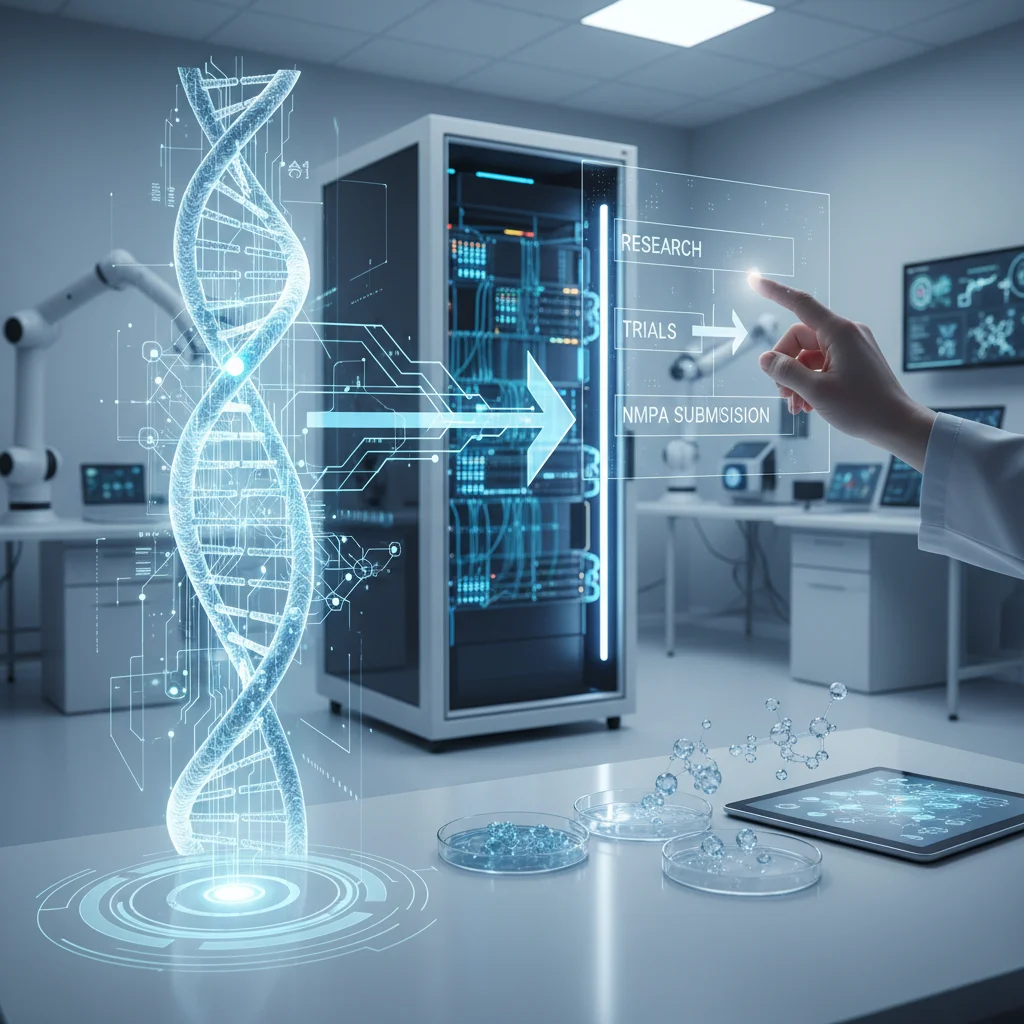
Artificial intelligence is fundamentally reshaping how drugs are approved in China. The National Medical Products Administration (NMPA), China's primary regulatory authority for pharmaceutical approvals, is actively integrating AI and big data analytics into its drug evaluation and review processes to accelerate NMPA drug approval timelines while maintaining rigorous safety standards. This modernization reflects China's broader regulatory reforms since 2017, which have prioritized innovation and expedited pathways. For pharmaceutical industry professionals, regulatory affairs specialists, and biotech innovators operating in the Asia-Pacific region, understanding how AI is transforming the NMPA approval landscape is critical to competitive positioning and market success.
AI Technologies Transforming Drug Development and Regulatory Review
The integration of artificial intelligence into pharmaceutical research and development has created a new paradigm for accelerating drug discovery and clinical development in China. AI applications are now embedded across multiple stages of the drug development lifecycle, fundamentally changing how companies approach regulatory submissions to the NMPA.
Target Identification and Biomarker Discovery
AI-driven data mining and predictive modeling are enabling faster identification of viable drug targets and clinically relevant biomarkers. Machine learning algorithms analyze vast genomic and proteomic datasets to identify disease pathways and patient subpopulations most likely to benefit from novel therapeutics. This capability is particularly valuable in therapeutic areas including oncology, where precision medicine approaches require robust biomarker validation, and in immunology, where patient stratification determines clinical success.
Patient Stratification and Real-World Data Analytics
AI tools are optimizing clinical trial design through intelligent patient stratification, reducing enrollment timelines and improving trial efficiency. Real-world data (RWD) analytics powered by artificial intelligence enable companies to analyze electronic health records, claims data, and observational studies to validate trial populations and predict treatment outcomes. This approach strengthens regulatory submissions by demonstrating clinical relevance in China's diverse patient populations across cardiovascular and neurology indications, where real-world evidence increasingly supports regulatory decision-making.
Predictive Modeling and Data Review Acceleration
Machine learning models are accelerating the NMPA's data review processes by automating preliminary quality assessments of clinical data submissions, flagging inconsistencies, and identifying critical safety signals. Predictive algorithms can forecast regulatory questions and data gaps before formal submission, enabling companies to proactively address NMPA concerns and reduce review cycles. This capability directly shortens approval timelines by improving submission quality and reducing back-and-forth exchanges with regulatory reviewers.
Regulatory Reforms and NMPA Policies Supporting AI-Driven Approvals
China's pharmaceutical regulatory landscape has undergone significant modernization over the past seven years, creating an increasingly favorable environment for AI-assisted drug development and accelerated approvals.
Key Regulatory Reforms Since 2017
The NMPA's 2017 reform initiatives fundamentally shifted China's regulatory philosophy toward innovation and efficiency. These reforms introduced expedited review pathways, including priority review and conditional approval mechanisms, designed to accelerate market access for drugs addressing unmet medical needs. The regulatory framework now explicitly recognizes the value of real-world evidence and post-market surveillance data, creating pathways for companies to submit AI-analyzed datasets as supporting evidence for regulatory submissions.
NMPA Initiatives on AI and Big Data Analytics
The NMPA has formally promoted the adoption of AI and big data analytics within its own review operations and industry submissions. The agency has established technical guidance documents and collaborative working groups to standardize how AI methodologies are applied in drug evaluation. This institutional commitment signals that AI-supported submissions are not only acceptable but increasingly expected in complex therapeutic areas where large datasets require sophisticated analytical approaches.
Collaborative Frameworks and Industry Partnerships
Collaboration between the NMPA, Chinese biotech companies, multinational pharmaceutical firms, and artificial intelligence startups has accelerated the validation and implementation of AI methodologies in regulatory submissions. Industry consortia and public-private partnerships are establishing best practices for AI tool qualification, data security, and algorithmic transparency. These frameworks ensure that AI applications meet regulatory standards while enabling faster adoption across the industry.
Market Implications: AI as a Strategic Advantage in China's Pharmaceutical Sector
China represents the second-largest pharmaceutical market globally, with a patient population exceeding 1.4 billion and significant unmet medical needs across chronic and complex disease categories. The integration of AI into drug development and regulatory approval processes is reshaping competitive dynamics in this critical market.
Competitive Landscape: Domestic Biotech vs. Multinational Adaptation
Domestic Chinese biotech companies are leveraging AI as a core competitive advantage, using machine learning and real-world data analytics to accelerate drug discovery and reduce development costs. Multinational pharmaceutical companies are rapidly adapting their China strategies to incorporate AI-driven approaches, recognizing that regulatory efficiency and data robustness are now key differentiators in gaining NMPA approval and market access. Companies that integrate AI into their regulatory strategies are achieving faster approval timelines and higher submission quality, directly translating to competitive advantage in market entry.
Accelerating Market Entry and Addressing Unmet Medical Needs
AI-driven drug development enables companies to identify and validate treatments for underserved patient populations more rapidly than traditional approaches. In oncology, cardiovascular disease, immunological disorders, and neurological conditions—areas where China faces significant disease burden—AI-optimized clinical trials can demonstrate efficacy and safety more efficiently, accelerating NMPA approval and patient access. This capability is particularly valuable in rare diseases and complex conditions where patient populations are fragmented and traditional trial designs are inefficient.
Future Outlook for AI-Driven Pharmaceutical Development in China
The trajectory of AI integration in China's pharmaceutical sector points toward sustained acceleration of NMPA drug approvals. As regulatory guidance on AI methodologies becomes more standardized and industry expertise matures, artificial intelligence will transition from a competitive differentiator to an industry standard. Companies that establish AI capabilities now will benefit from first-mover advantages, while those that delay adoption risk falling behind in regulatory efficiency and market competitiveness. The NMPA's continued investment in AI infrastructure and regulatory modernization suggests that this trend will intensify, making AI proficiency essential for pharmaceutical companies seeking sustained success in China.
Frequently Asked Questions
How does AI specifically accelerate the NMPA drug approval process?
Artificial intelligence accelerates NMPA approvals through multiple mechanisms: automated preliminary data quality assessment reduces submission errors and regulatory questions; predictive modeling identifies potential safety signals early, enabling proactive risk mitigation; machine learning algorithms optimize clinical trial design, reducing enrollment timelines; and real-world data analytics strengthen the clinical evidence package submitted to regulators. These capabilities collectively reduce the time required for NMPA review cycles and improve submission quality, directly shortening overall approval timelines.
What types of AI applications are most commonly used in Chinese pharmaceutical companies' regulatory submissions?
The most prevalent AI applications in NMPA submissions include machine learning models for biomarker discovery and patient stratification, natural language processing for clinical trial data mining, predictive algorithms for adverse event detection and pharmacovigilance, and real-world data analytics platforms that integrate electronic health records and claims data. These tools are particularly valuable in complex therapeutic areas including oncology, cardiovascular disease, and immunological disorders, where large datasets and heterogeneous patient populations benefit from sophisticated analytical approaches.
Are there specific NMPA guidance documents or policies governing the use of AI in drug development and regulatory submissions?
The NMPA has established technical guidance documents and collaborative working groups focused on standardizing AI methodologies in drug evaluation. While comprehensive AI-specific guidance continues to evolve, the NMPA's regulatory framework increasingly accepts AI-analyzed datasets and real-world evidence as supporting materials in submissions. Companies should consult current NMPA guidance documents and engage in pre-submission meetings with regulators to clarify expectations for AI tool qualification, algorithmic transparency, and data validation in specific submission contexts.
What competitive advantages do companies gain by integrating AI into their China drug development strategies?
Companies that integrate AI into their China strategies gain multiple competitive advantages: faster clinical trial design and patient enrollment through optimized stratification; higher-quality regulatory submissions that reduce NMPA review cycles; earlier detection of safety signals through AI-powered pharmacovigilance; and more efficient identification of drug targets and biomarkers in unmet medical need areas. These advantages translate directly to faster market entry, reduced development timelines, and improved regulatory success rates compared to competitors using traditional approaches.
How does China's regulatory environment compare to other major pharmaceutical markets regarding AI adoption in drug approvals?
China's NMPA has established itself as a leader in formally embracing AI and big data analytics within its regulatory framework. The agency's explicit promotion of AI methodologies, establishment of collaborative frameworks with industry, and integration of real-world evidence into regulatory decision-making position China ahead of many other markets in terms of regulatory acceptance of AI-driven submissions. This forward-looking approach reflects China's broader innovation strategy and creates a favorable environment for companies developing AI-assisted drug development capabilities, particularly compared to more conservative regulatory jurisdictions.
References
- National Medical Products Administration (NMPA). Regulatory guidance on drug evaluation and approval efficiency. China, 2017–present.
- NMPA Collaborative Working Groups on Artificial Intelligence and Big Data Analytics in Drug Evaluation. Industry partnership initiatives and technical standards documentation.
- Chinese pharmaceutical industry reports on AI-driven drug development and regulatory modernization, 2020–2024.
- Real-world evidence and pharmacovigilance integration frameworks established by NMPA in alignment with international regulatory harmonization efforts.
About the Author
Related Articles
PMDA SAKIGAKE Designation: Review of Approved Drugs & Impact in Japan

XtalPi-Enabled PEP08 PRMT5 Inhibitor Begins Phase I Cancer Trial Enrollment
PMDA SAKIGAKE Designation: Accelerating Innovative Therapies in Japan